Friends of IPM Awards
The mission of the Southern IPM Center is to champion the development and adoption of integrated pest management (IPM), the science of managing pests while protecting people, the environment and economy. Each Regional Center engages broadly with stakeholders to identify and address regional pest priorities in agriculture, communities and natural areas.
Since 2003, the Southern IPM Center (SIPMC) has worked with USDA, Land Grant universities, Extension, and many other partners in promoting and facilitating the development and implementation of IPM in many settings across the region.
Many of these partners have contributed to the region’s well-being for years or even decades.
Graduate Student Award
The Friends of IPM Award program typically recognizes two graduate students per award year: one in a Master’s program and one in a Ph.D. program in the Southern region of the United States. This year, there are two Ph.D. awardees, instead.
Recipients of this award have demonstrated strong potential of providing leadership in IPM as evidenced through fieldwork, data collection, experimental design, teaching, outreach, or other support for research, Extension, and/or education IPM projects. They must also be enrolled at a college or university located within the Southern Region of the United States and working in IPM related disciplines such as entomology, plant pathology, nematology, and weed science.
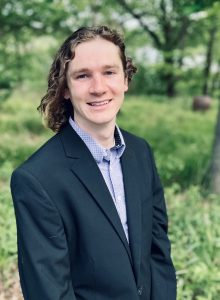
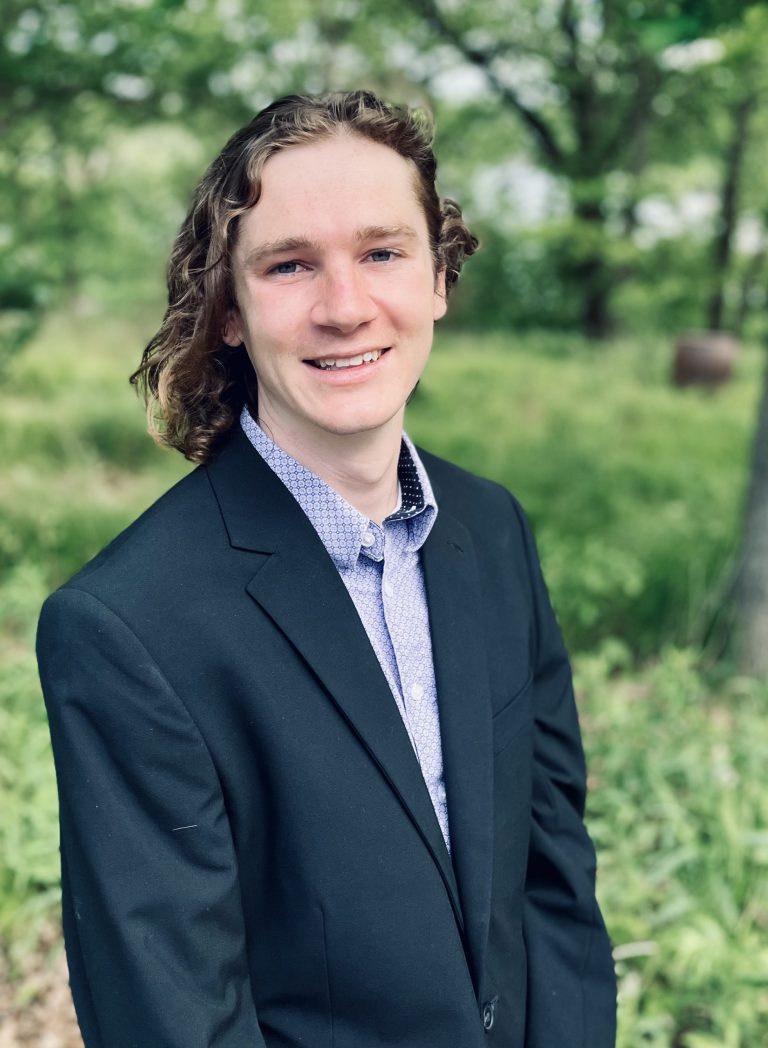
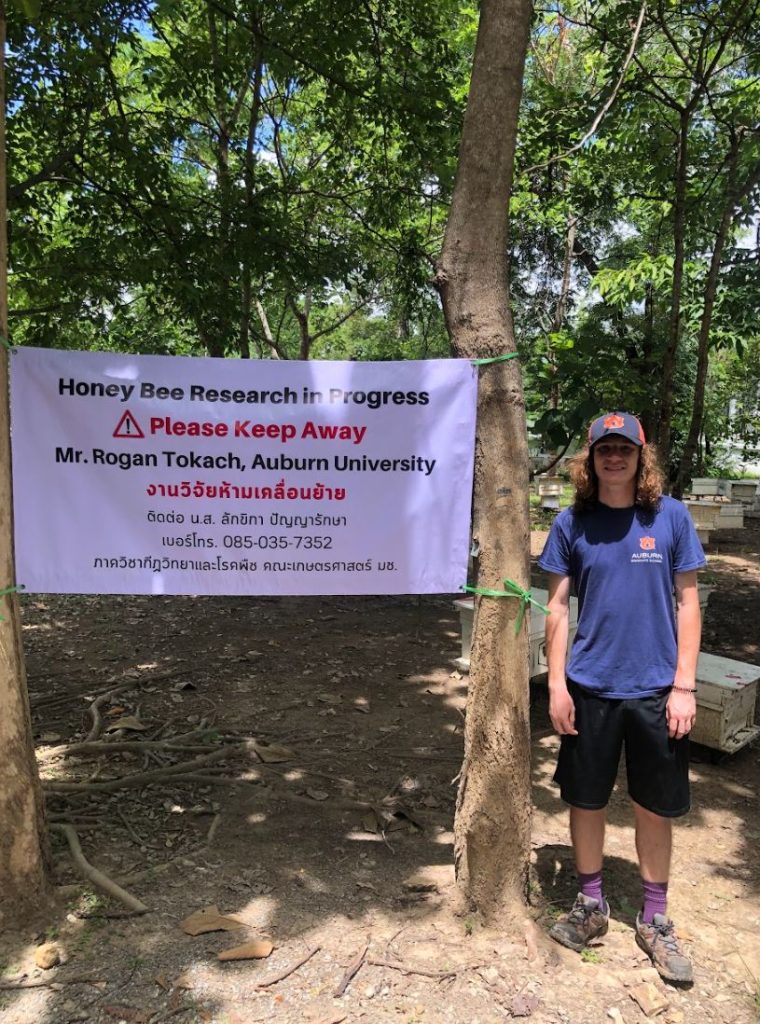
Rogan Tokach
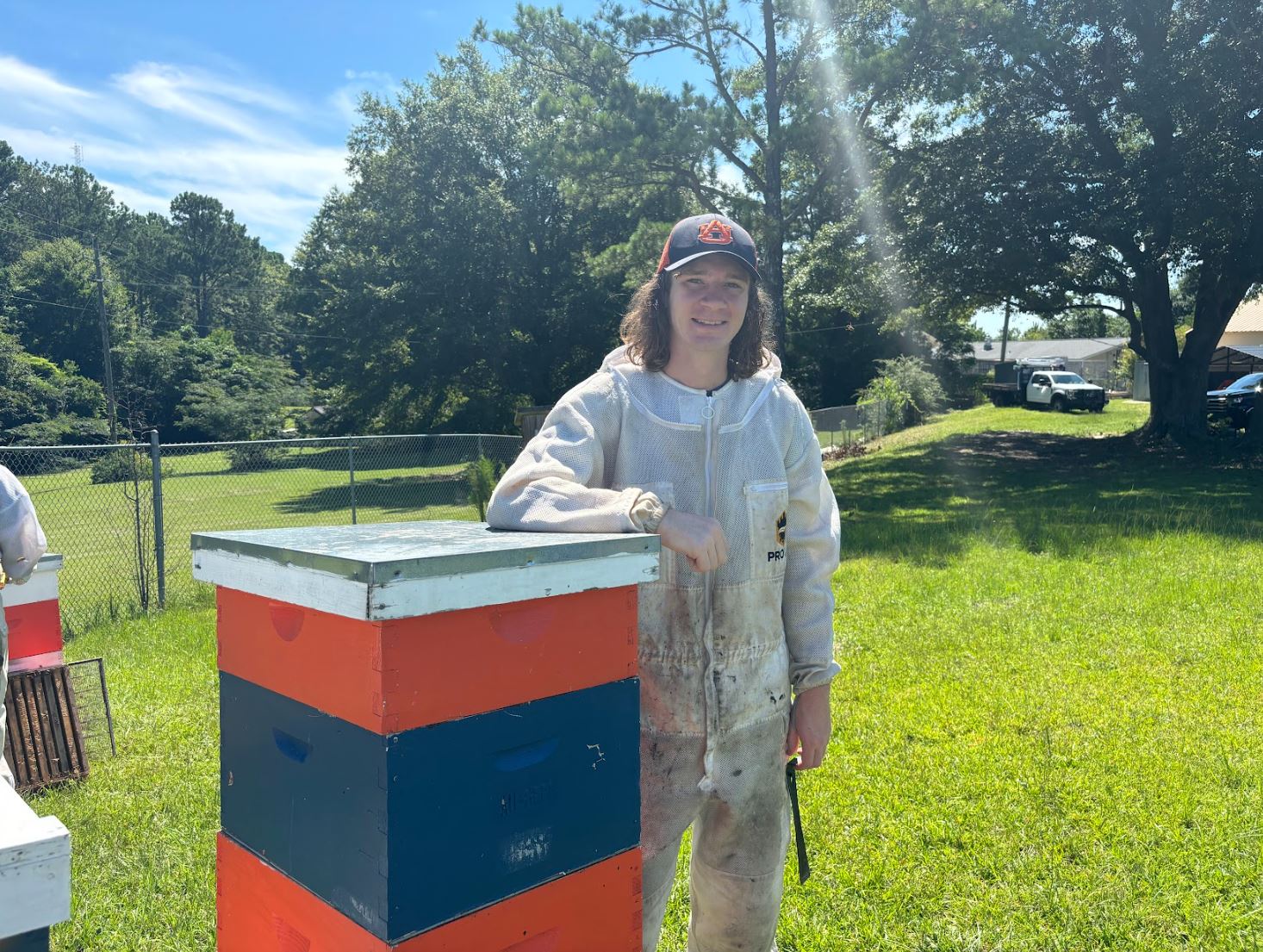
Rogan Tokach, Auburn University, Department of Entomology and Plant Pathology
Dissertation: Developing sustainable parasitic mite management strategies for beekeepers.
Areas of Specialization:
- Integrated Pest Management in apiculture
- Varroa destructor mite
- Tropilaelaps mercedesae mite
Rogan Tokach is a second-year Ph.D. student at Auburn University working in the AU-Bees laboratory. Rogan’s dissertation research focuses on bridging knowledge gaps among apiculturists and providing beekeepers with effective treatment strategies to control two mite species that cause significant honey bee colony loss, the Varroa destructor mite and the Tropilaelaps mercedesae mite.
Varroa destructor Mite
Varroa destructor mites are the leading cause of honey bee colony loss worldwide. Worse, Varroa mite populations have shown increased resistance to one frequently applied treatment method, a miticide called amitraz. In response, Rogan’s work undertakes a two-pronged approach to fill knowledge gaps regarding amitraz resistance while researching treatment alternatives that can be utilized instead of the miticide to prevent further resistance development and control Varroa populations.
To determine the extent of amitraz resistance issues, Rogan conducted amitraz resistance samplings at different commercial beekeeping operations across the country. Rogan collaborated with the USDA to investigate alternative Varroa mite treatments. During his work, Rogan genotyped Varroa mites to determine how allele dynamics are impacted by various treatment methods.
An Emerging Parasitic Mite Threat
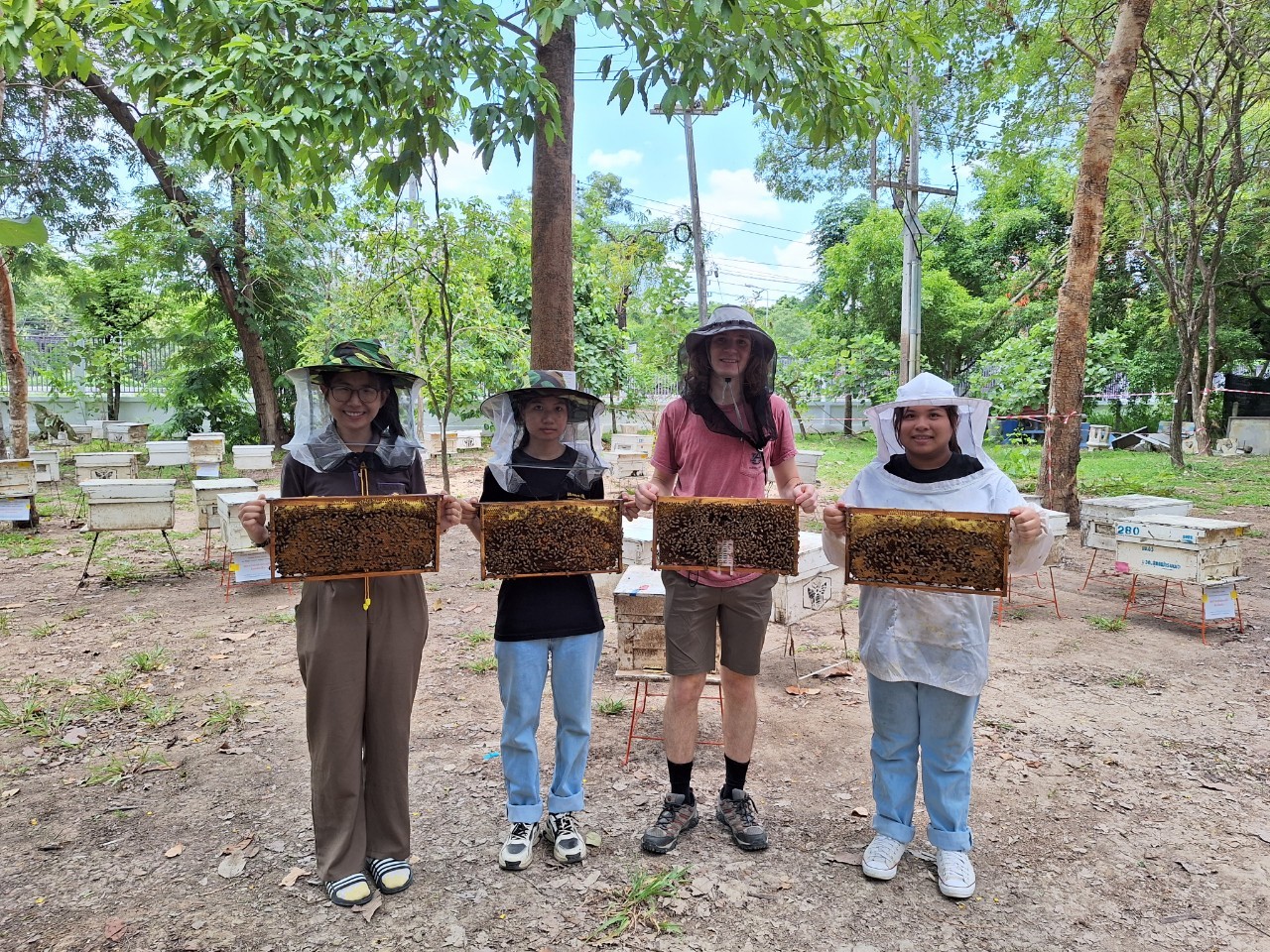
Rogan’s Ph.D. research led him across the globe to Chiang Mai, Thailand, where he studied Tropilaelaps mercedesae, a mite pest of honey bees. Though not yet in the United States, the mite has recently expanded its geographic range. Since Tropilaelaps is relatively understudied, Rogan’s work looks to fill knowledge gaps regarding Tropilaelaps mite management.
Rogan has taken several trips to Thailand to perform research experiments on Tropilaelaps management and investigate the potential for colony-level eradication by combining cultural and chemical control techniques. Rogan also conducted experiments regarding the detection and dispersal of the Tropilaelaps mite, offering key insights into how the mite moves among bee colonies and effective monitoring strategies. Rogan’s work has been disseminated to government officials to help create an action plan to prevent Tropilaelaps’ establishment if it were introduced into the United States.
As a result of his extensive research, Rogan is among the Top 5 Tropilaelaps mite specialists in the world.
Resource Creation and Publications
As a member of the AU-Bees Lab, Rogan coordinated data collection for bi-weekly map updates for Auburn University’s Winter Capped Honey Bee Brood Monitoring Program. These beneficial maps, which can be found on the program’s website, provide status updates about capped broods in honey bee colonies during the winter and inform beekeepers of the optimal time to treat the Varroa mite with oxalic acid based on honey bee colony phenology.
Rogan helped organize fall and spring beekeeping workshops designed to teach new beekeepers vital beekeeping skills and management practices, including integrated pest management strategies for the Varroa mite. Rogan has worked with the SIPMC Varroa IPM working group, where he resourcefully assembled other university and USDA researchers to discuss the advancement of current Varroa IPM practices and determine research priorities.
Rogan has first-authored two exceptional extension handbooks about bee species. He also has two first-author manuscripts generated from his dissertation work on Tropilaelaps IPM, which are currently being reviewed in Scientific Reports and the Journal of Economic Entomology.
In addition, Rogan has shared his work on parasitic mite management in honey bee colonies through many channels, including three podcasts, two YouTube videos, and a television broadcast.
Presentation to Stakeholders
While at Auburn, Rogan has built strong partnerships with commercial beekeepers. These relationships have enabled him to gain valuable insight into their needs and transform their expertise into impactful projects.
Rogan has been very active in sharing his work with beekeeping stakeholders. In two years, Rogan has done twenty-six extension presentations, many of which have showcased his groundbreaking work on developing effective management strategies against parasitic mite species.
Rogan also confidently creates awareness of his work through engaging and informative presentations to his colleagues at conferences, including the American Association of Professional Apiculturalist’s American Bee Research Conference, where his presentation was awarded first place.
Special Thanks and Future Plans
Rogan would like to thank his advisor, Dr. Geoff Williams, members of the AU-Bees Lab, Dr. Frank Rinkevich, and Dr. Bajaree Chuttong and the Melopini and Apini Research Lab for their assistance with projects throughout his Ph.D. Rogan would also like to thank his friends and family for their endless support during his Ph.D.
Following his graduation in June, Rogan will be working as an assistant professor for applied honey bee entomology at North Dakota State University, a position aimed at doing research and extension to help beekeepers in the Midwest region. In this role, he hopes to conduct large-scale commercial research trials to address beekeeper needs and mitigate colony losses.
2025 Friends of IPM Awardees
- Bright Idea Award: Dr. Nupur Sarkar, Dr. Lina Bernaola, and the Bernaola Lab, Texas A&M University
- Pulling Together Award: MyIPM for Vegetables team, led by Drs. Rebecca A. Melanson, Tom Kuhar, Tom Bilbo, and Inga Meadows
- IPM Educator Award: Dr. Sonja Swiger, Texas A&M University
- Future Leader Award: Dr. Scott Graham, Auburn University
- IPM Hall of Fame Award: Eddie McGriff, Alabama Cooperative Extension System
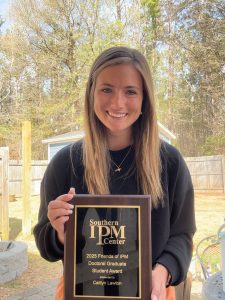
- Doctoral Student Award (2 winners):
- Rogan Tokach, Auburn University
- Caitlyn Lawton, Auburn University
Other 2025 Recipient Stories
MyIPM For Vegetables Team
MyIPM for Vegetables supplies producers with IPM information for disease...
Read MoreDr. Nupur Sarkar, Dr. Lina Bernaola, and the Bernaola Lab
Implementing Plant Varietal Resistance for Management of the Invasive Rice...
Read MoreSonja Swiger
Sonja has provided valuable training courses on vector identification, disease...
Read More