
Friends of IPM Awards

The mission of the Southern IPM Center is to champion the development and adoption of integrated pest management (IPM), the science of managing pests while protecting people, the environment and economy. Each Regional Center engages broadly with stakeholders to identify and address regional pest priorities in agriculture, communities and natural areas.
Since 2003, the Southern IPM Center (SIPMC) has worked with USDA, Land Grant universities, Extension, and many other partners in promoting and facilitating the development and implementation of IPM in many settings across the region.
Many of these partners have contributed to the region’s well-being for years or even decades.
Hall of Fame
The Southern IPM Hall of Fame award recognizes individuals who have contributed to any important aspect of Southern IPM over many years with documented history of career achievements in IPM.
Along with authorship of educational materials, research papers, manuals, books, and presentations of IPM material, Hall of Fame award candidates have greatly impacted IPM in the Southern region over the lifetime of their career.
At the time Dr. Harold Coble received this honor, it was known as the Southern IPM Lifetime Achievement Award. The award has since been renamed the Southern IPM Hall of Fame Award and continues to recognize individuals whose careers have had a lasting impact on integrated pest management.
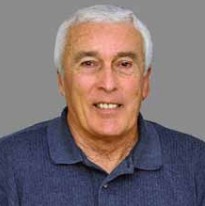
Harold Coble, USDA-OPMI
Original Story Written by Rosemary Hallberg
Edited by Abbey Stewart
Dr. Harold Coble first recognized the need for economic thresholds for weeds while explaining the use of Basagran to a group of soybean growers.
“I told them how to use it, how much to use, and when they would need to use it,” Coble says.
Then one grower in the back of the room raised his hand and asked, “So when do we use this?”
Slightly annoyed, Coble started explaining the process again when the grower said, “No. I mean, when do I have enough weeds in my field to be able to afford this product?”
At that time, there were no economic thresholds for weeds, and Coble had no answer for him. However, the question intrigued him so much that he began a quest to find the answer to the grower’s question, not just for that product, but also for products labeled for weeds in soybeans.
In 1976, he became involved in the Adkisson project, a USDA-funded Research and Extension project designed to test, refine, and evaluate methods to reduce pesticide use while maintaining crop quality and yield. During the first of two projects, Coble delivered research results about IPM to farmers. In 1985, the project culminated with an article on weed control in agricultural systems.
Three years later, Coble and fellow NCSU scientist Gail Wilkerson collaborated on a weed-control decision-support system named HERB. HERB was the first online system that allowed growers to input a set of variables and get a control recommendation in return. The tool became so popular that other Extension specialists adapted it for their states.
Coble’s career took another turn during an early-1990s meeting between representatives of the NC State Weed Science faculty and BASF. As Centers for Excellence were becoming more prominent, a BASF representative asked if the University could develop a Center of Excellence for Weed Science. Coble became the likely candidate to research the idea, so he spoke to Ron Kuhr, then director of research for the College of Agriculture and Life Sciences at NCSU.
Rather than simply giving a green light, Kuhr encouraged Coble to make the Center multi-disciplinary and instead create a Center for Integrated Pest Management. With a plan in mind, Coble had just one more daunting task: to find money to start the Center. The National Science Foundation sometimes granted start-up funding to scientific centers, but it was very particular about the centers’ missions. Most of the centers that received funding focused on the hard sciences, such as engineering and food science. So when Coble broached the idea with the director of the NSF Industry/University Cooperative Research Centers program, he wasn’t surprised to hear that IPM did not fit in NSF’s model.
Fortunately for Coble, the USDA was beginning to focus more attention on IPM that year, so within a few days, the director called Coble back to accept his proposal. With $50,000 in start-up money from the NSF, Coble traveled to several states, visited private companies, and signed up six companies as the Center’s first sponsors at $50,000 each. The new Center for IPM would support IPM research on the national level.
Once the Center was up and running, Coble agreed to manage it for a year. A year and a half later, the college administration convinced entomologist Dr. Ron Stinner to be the new director, and Coble stepped down and resumed his duties as a weed scientist. It wasn’t long, however, before Coble received another leadership offer, this time from the USDA Cooperative State Research, Education and Extension Service (CS-REES) to be the national IPM Coordinator. As national IPM Coordinator, Coble chaired the USDA IPM Coordinating Committee (which eventually became the Federal IPM Coordinating Committee) and met with scientists from USDA and other agencies to coordinate IPM efforts across agencies.
Keith Pitts, Special Assistant to the Secretary on Domestic Policy, suggested putting together a proposal for IPM grants to garner more support for IPM. Coble wrote up concept papers for two new grants: Crops and Risk and the Risk Avoidance Mitigation Program. Both received funding and became long-term programs that would help researchers find new pest management tools to replace chemical pesticides that had been canceled or were beginning to lose effectiveness due to resistance.
Shortly after the passage of the Food Quality Protection Act in 1996, the USDA developed an IPM initiative, promising that by the year 2000, 75 percent of U.S. cropland would be farmed using IPM. Concerned that the projection may have been too optimistic, USDA directors asked Coble to explain how the agency would measure the number of acres farmed using IPM. So Coble came up with a definition of the steps needed for effective IPM: Prevention, Avoidance, Mitigation, and Suppression (PAMS). Farmers had to use three of the four tactics to qualify as an IPM implementer. A subsequent survey revealed that 74 percent of acres were farmed under IPM, according to the PAMS definition.
However, the General Accounting Office was not convinced. In 1998, at Congress’s request, they conducted their own study and published a report that criticized both the federal coordination and the national implementation of IPM. Coble would later be asked to respond to the report.
Coble’s next project was to develop a concept for coordinating IPM efforts across the country. Some USDA staff suggested developing a model of IPM Centers, based on the North Carolina Center for IPM. Coble proposed creating 12 IPM Centers, each in one of EPA’s regions, at a cost of $36 million. In the year 2000, CS-REES decided to repurpose $4 million in funding for the National Pesticide Impact Assessment Program into four regional IPM Centers at Pennsylvania State University, Michigan State University, the University of Florida, and the University of California at Davis.
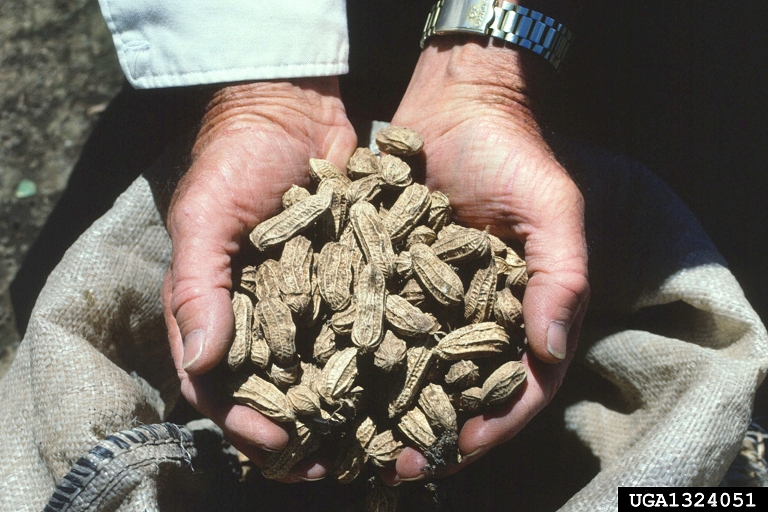
Dr. Coble’s research focused on the development of economic, systems-based weed control for row crops like cotton, peanuts, and corn. Photo credit: Karen Williams, Bugwood
“The reality of the Centers is much better than the idea ever was,” says Coble. “They have evolved and really taken on the vision of what we thought the Centers should be.”
In 1999, Coble left Washington and returned to NC State. Shortly after he had moved his furniture from his townhouse in Alexandria back to his home in Raleigh, the director of the USDA Office of Pest Management Policy (OPMP) called to offer him a job with the agency. Coble refused to move back to DC but said he would take the job if he could remain in Raleigh. The Secretary of Agriculture agreed to his terms.
Coble’s first assignment was to write a letter responding to the report that resulted from the GAO’s IPM evaluation in 1998. As he wrote the letter, explaining that IPM needed to be a coordinated effort, he realized that the agency needed a group that would coordinate IPM efforts across all government agencies and a “roadmap” defining the purposes of IPM and the areas that it covers.
The Federal IPM Coordinating Committee (FIPMCC), which began in 2004, approved the IPM Roadmap soon after its first meeting, a document that is still frequently cited by researchers and project directors and used to evaluate grant proposals.
When Coble retired in January 2014, he left behind a legacy of grant programs, IPM definitions, an international Center for IPM, and four regional IPM Centers that still support IPM research and extension in the country.
His weed control decision support system is used nationwide and taught in university IPM courses as a weed IPM tool. Researchers and commodity groups are fighting to restore funding to the Crops at Risk and Risk Avoidance Mitigation programs, both of which were defunded in 2011.
“If I can get people together and promote collaboration, that’s what I want,” says Coble. “I’ve learned the value of working across agencies and with people with different skill sets. You should never surround yourself with people that have your skill sets. You need someone to throw darts at what you think.”