Dr. Daniel Collins - IPM Ambassador Travel Grant Recipient Fosters Collaboration Across the 1890 Land-Grant System
Written by Kennedy McNair
For Dr. Daniel Collins, Professor of Plant Pathology at Alcorn State University, attending the 2024 1890 Association of Research Directors Research Symposium through the IPM Ambassador Travel Grant was about more than presenting research. The IPM Ambassador Travel Grant program is an opportunity to build lasting collaborations that continue to benefit students, researchers, extension professionals, and the communities they serve.
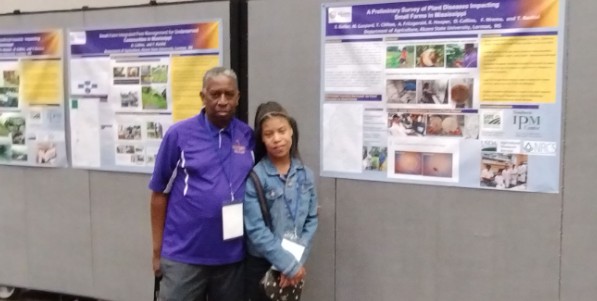
At the symposium, Collins delivered oral and poster presentations on Small Farm Integrated Pest Management (IPM) initiatives that support the pest management needs of limited-resource farmers. His presentation emphasized the land-grant mission by demonstrating how research, education, and extension work together to improve IPM outreach while supporting limited-resource agricultural communities.

Presenters at the 2024 1890 IPM Session. Daniel Collins is in the front row in the center.
Collins also used his presentation to highlight the historical contributions of Dr. George Washington Carver as a plant pathologist. Today, Collins continues the initiative of Dr. Carver by taking undergraduate, graduate, and K-12 students to the USDA Agricultural Research Service’s Beltsville Agricultural Research Center, where they examine Carver’s archived fungal specimens and correspondence before applying modern molecular and traditional techniques to identify plant pathogens and insect pests affecting agricultural and forestry systems.
The symposium also provided an opportunity to connect with researchers, extension professionals, and collaborators from across the 1890 land-grant system. Collins said those relationships have continued well beyond the conference through collaborative research projects, student exchanges, extension workshops, and field days focused on addressing the needs of limited-resource farmers.
“The ambassador grant allowed us to collaborate and create that synergy to do a lot of wonderful things,” Collins said.
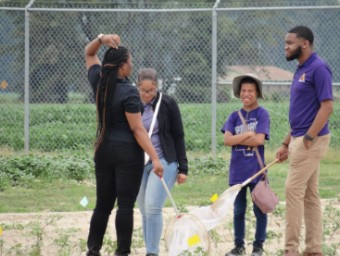
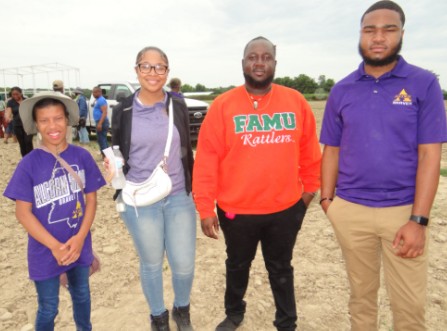
One example of that collaboration is the Small Farm IPM Working Group, supported by the Southern IPM Center. Collins described how partnerships among institutions, including Alcorn State University and Florida A&M University, have expanded educational programming for hard-to-reach farming communities while creating opportunities for students to gain hands-on experience through internships and cross-training. Students from Alcorn have traveled to Florida A&M for specialized training in entomology, while students have visited Alcorn to gain experience in plant pathology.
These collaborations have also extended into community outreach. Collins noted that a series of Small Farm Climate-Smart IPM workshops conducted through these partnerships was featured by NPR as part of its The Future of Food series, highlighting how 1890 universities are working together to support hard-to-reach farmers and global food security while preparing the next generation of agricultural professionals. As emphasized by Collins, successful IPM depends on collaboration involving stakeholders throughout the research and extension process. This creates stronger solutions to the pest management challenges small farms face while protecting local food systems.
“When you bring people together, it creates that synergy,” Collins said. “The synergy that was created allows us to work together to help our communities and train our students.”
Looking ahead, Collins hopes future IPM Ambassador Travel Grant recipients will continue building partnerships across institutions and actively involve farmers and stakeholders in the research process. “We need to bring the whole community together; it’s all interconnected,” Collins said.
For Collins, the symposium demonstrated that meaningful progress in IPM comes through collaboration. The relationships formed through the IPM Ambassador Travel Grant continue to inspire new research, expand educational opportunities, and strengthen extension efforts that support farms and communities.