
Project Report
Tomato producers face persistent weed management challenges due to limited herbicide options, high crop sensitivity to chemicals, and the high labor costs associated with hand-weeding
An integrated approach combining soil steaming, biochar herbicide protection pods, and mulches improved tomato growth, reduced weed pressure, and minimized crop injury in greenhouse and field trials.
Non-chemical weed management strategies provide growers with practical tools to reduce herbicide use and labor costs while supporting healthy tomato production with minimal environmental risk.
Incorporating allelopathic cover crops, soil steaming, and biochar herbicide protection pods (HPPs) for integrated weed management and improved soil health in tomato
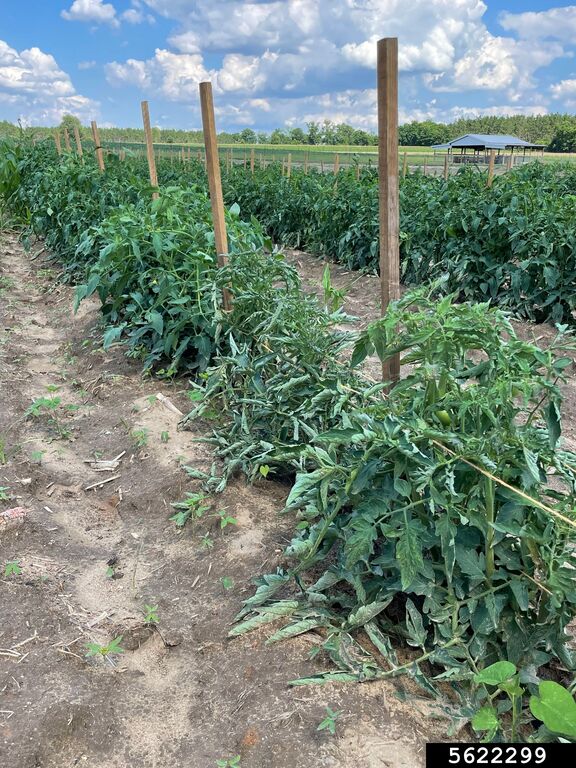
Weed control often poses significant challenges for tomato producers. Because tomato crops are highly sensitive to herbicides, there are limited chemical control options. In addition, hand-weeding, a mechanical management strategy, is labor-intensive and costly.
In response to the current state of weed management for tomatoes, Dr. Te Ming (Paul) Tseng and his team conducted a project that combined soil steaming, biochar herbicide protection pods, and cover crops to test alternative, integrated weed control strategies for tomatoes.
In greenhouses, Dr. Tseng’s team utilized the biochar herbicide protection pods to shield experimental tomato seedlings from commonly used herbicides. They found that tomatoes protected by the pods were healthier, taller, and less injured.
In the field, Dr. Tseng and his team applied soil-steaming treatments before transplanting tomatoes, reducing the weed population. As a result, tomato plants grew taller and produced more fruit. Dr. Tseng’s team found that while plastic mulches suppressed weeds, cover crops did not significantly reduce weeds. Integrating soil steaming and mulches proved effective as a non-chemical weed control strategy.
Dr. Tseng’s work offers farmers and growers new tools to reduce herbicide use, lower labor costs, and produce healthier tomatoes with minimal environmental risk.
The team presented their findings in a conference paper at the Southern Weed Science Society 77th Annual Meeting.
Project Leader
Dr. Te Ming (Paul) Tseng, Mississippi State University