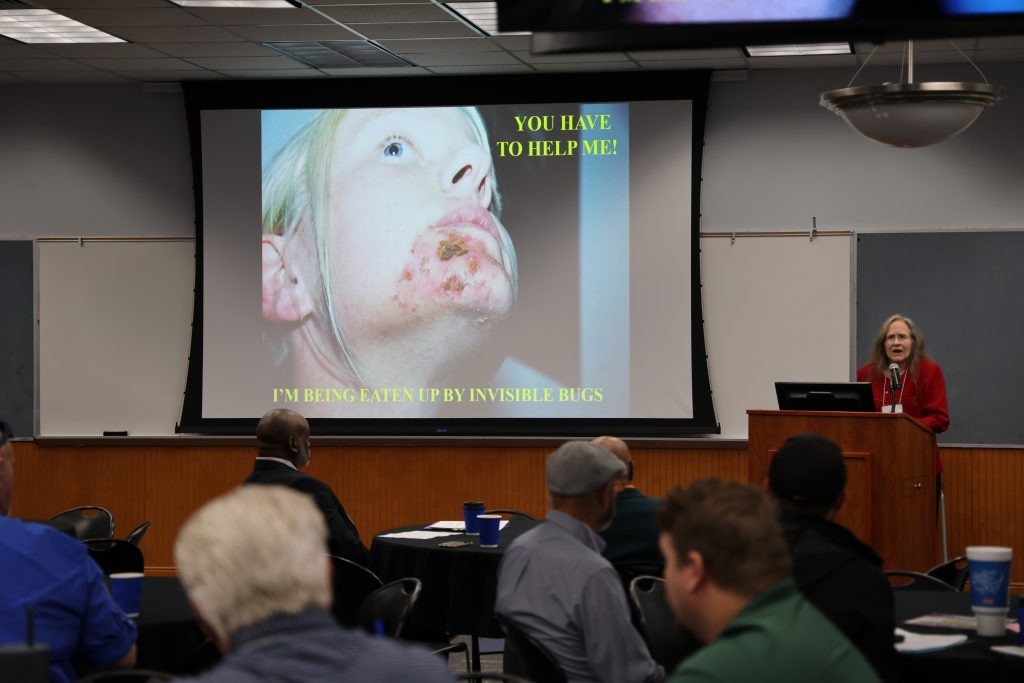
Delusional infestation occurs when a person falsely believes that insects or other parasites are infesting them or their environment.
Delusional infestation primarily affects post-menopausal women, but younger women and men can also be affected. It often occurs in those with underlying depression, anxiety, schizophrenia, OCD, dementia, or substance use disorders.
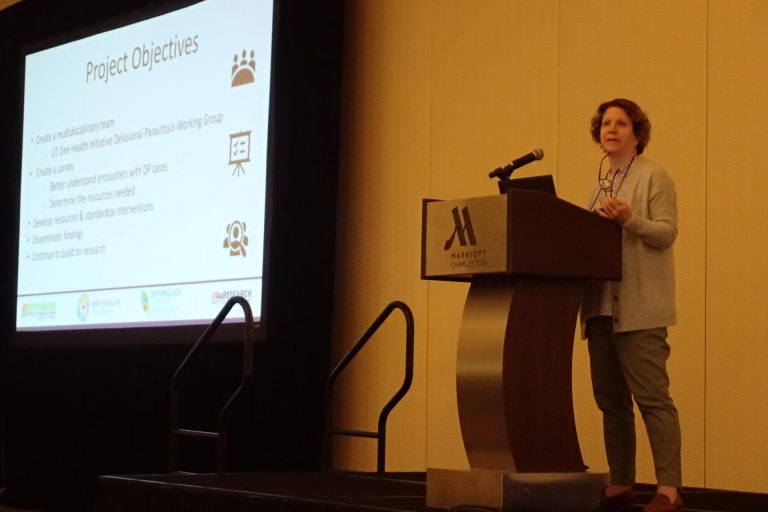
The Southern Region Delusional Infestation Working Group was formed because Extension agents and pest management professionals were frustrated by their inability to assist individuals with suspected delusional infestation.
Southern Region Delusional Infestation Working Group
Nancy Hinkle spoke to pest management professionals on November 7, 2024 about symptoms and treatment. (Anamika Swarma, Florida A&M University)
Often, Extension agents and pest management professionals struggled to support individuals with suspected delusional infestations effectively. As a result, a team of 36 urban entomologists, pest management professionals, diagnosticians, psychiatrists, a psychologist, and a medical doctor from 12 southern states trained non-healthcare professionals to assist individuals with delusional infestation. The Southern Regional Delusional Infestation Working Group developed several publications and a presentation on delusional infestation to educate Extension agents and pest management providers on symptoms and treatment options.
In total, the working group produced three Extension publications, four webinars, and nine conference papers. They also gave 27 Extension presentations and eight conference presentations.
Due to their extensive, collaborative effort, 90% of professionals surveyed later indicated that they understand delusional infestation symptoms and their responsibility in assessing individuals with suspected delusional infestation. In addition, 82% of the professionals surveyed stated that they felt confident helping individuals with delusional infestation. The Southern Region Delusional Infestation Group aims to build networks of medical and pest-management professionals to help individuals with delusional infestation achieve remission.