One of the biggest challenges in ornamental plant production is managing insect pests without harming pollinators. In response to growing concern over the risks insecticides pose to beneficial species, researchers have begun developing Integrated Pest and Pollinator Management (IPPM) strategies that balance pest control with pollinator protection.
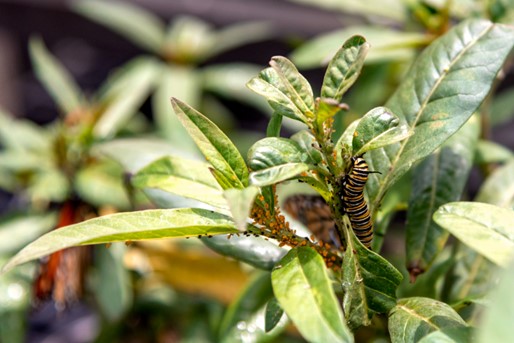
A research team led by Dr. Adam Dale, Dr. Jaret Daniels, and Dr. Bernadette Mach identified a critical gap in toxicological data for pollinators beyond the European honey bee, particularly for lepidopteran species that pollinate as adults. To address this need, the team focused on the monarch butterfly (Danaus plexippus), a charismatic and ecologically important species whose populations have declined dramatically in recent decades due to habitat loss and other pressures. The southeastern U.S., a region that supports both migrating and resident monarch populations, provided an ideal backdrop for the study.
Because the monarch’s larval host plant, milkweed, is increasingly grown in nurseries to support conservation efforts, the oleander aphid has emerged as a significant pest threatening both plant health and nursery profitability. The research team aimed to investigate the impact of oleander aphid infestations on monarchs and to identify insecticide options that are both effective against the pest and safe for monarch larvae.
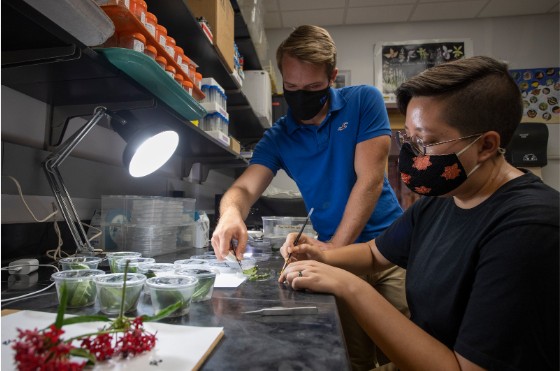
To achieve this, the team conducted milkweed leaf and whole-plant feeding assays to assess the effects of both acute and chronic monarch exposure to a range of insecticides used in nursery production. They also measured the efficacy of these insecticides against oleander aphids, providing growers with a clearer understanding of cost-benefit tradeoffs in pest management.
The team presented their findings at conferences and a webinar hosted by AmericanHort and the Horticulture Research Institute during Pollinator Week.
Additionally, the team produced three conference papers, one journal article, and one Extension publication.
By addressing these key data gaps, the project aims to generate foundational knowledge for developing IPPM strategies that are compatible with monarch conservation, helping growers reduce pesticide risks, maintain high-quality ornamental plants, and contribute to pollinator health across the southeastern landscape.